How Crypto Rewards Work: A Beginner's Guide
Published:
Nov 22, 2025
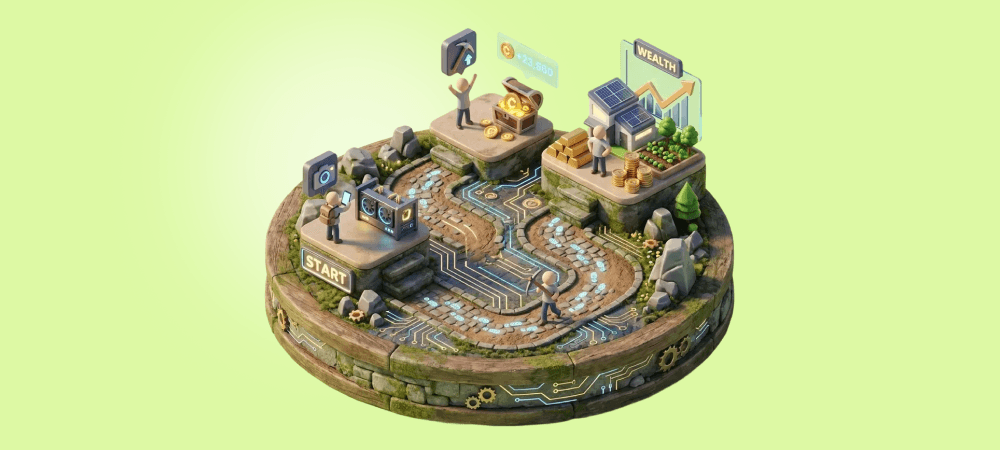
How Crypto Rewards Work: A Beginner's Guide to Blockchain-Based Earnings
Tired of earning rewards that expire before you can use them? Frustrated with redemption minimums that make your points feel worthless? You're not alone. Traditional rewards apps have dominated the loyalty space for decades, but they're built on a fundamentally flawed model—one where the company controls your rewards, not you.
Enter crypto rewards. A new generation of rewards app that is leveraging blockchain technology to give you something revolutionary: true ownership of your earnings. No expiration dates. No redemption minimums. No company deciding when your rewards disappear.
But what exactly are crypto rewards, and how do they work? If you're new to cryptocurrency, the concept might seem intimidating. That's why we've created this beginner's guide to demystify crypto rewards and show you why they're about to transform the entire rewards industry.
What Are Traditional Rewards? (And Why They're Broken)
Before we dive into crypto rewards, let's talk about the system you probably already know: traditional points-based rewards.
You've used them before. Link your credit card to Rakuten, Pogo, or Ibotta. Make a purchase. Earn points. Accumulate points over time. Redeem for gift cards, cash back, or merchandise.
Sounds simple, right? But here's the problem: the company owns your rewards, not you.
Think about what happens with traditional rewards:
Expiration dates: Your points disappear after 12-24 months of inactivity, at best. You earned them, but the company takes them back.
Redemption minimums: You can't cash out $5 in rewards. You need $10, $15 or sometime even $25 or more. This keeps your money locked in their system.
Limited redemption options: Want to convert your points to Bitcoin or stocks like Apple and Tesla? Too bad. Your only options are gift cards or cash back at a rate the company decides.
No ownership: The company can change the rules anytime. They can devalue your points, reduce earning rates, or shut down the program entirely.
Inflation impact: Your points don't appreciate in value. In fact, they lose value over time as inflation erodes purchasing power.
This model benefits the company, not you. They profit from your data, your spending patterns, and the float of your unredeemed points. You get a small percentage back in rewards.
It's a system designed to extract maximum value from you while giving you the minimum in return.
Introduction to Blockchain & Crypto: The Foundation of Crypto Rewards
To understand crypto rewards, you need to understand blockchain and cryptocurrency. Don't worry—we'll keep it simple.
What is blockchain?
Imagine a ledger (like a notebook) that records transactions. But instead of one company controlling this ledger, thousands of computers around the world maintain identical copies. When someone makes a transaction, it's recorded on all copies simultaneously. No single entity can change the records. No one can cheat the system.
That's blockchain. It's a decentralized, transparent, and secure way to record transactions.
What are tokens?
A token is a digital asset that lives on a blockchain. Think of it like digital money, but more flexible. Tokens can represent anything: currency, stocks, memecoins, ownership, voting rights, or in our case, rewards.
The key difference between tokens and traditional points: tokens are real digital assets that you own. You can trade them, hold them, or convert them to other assets. The company can't take them away.
Why blockchain matters for rewards:
Blockchain enables something revolutionary: decentralization. Instead of a company controlling your rewards, you do, and the blockchain proves it. The Crush app is your digital wallet, and proves you own your tokens. No company can revoke them. No expiration date can erase them.
This is the fundamental shift that makes crypto rewards different.
How Crypto Rewards Work: A Step-by-Step Breakdown
Let's walk through how crypto rewards work using Crush Rewards as an example.
Step 1: Link Your Spending Data
You download the Crush Rewards app and link your credit or debit cards. You can also upload receipts from any purchase. The app tracks your spending and shares anonymized data with market researchers who want insights into consumer behavior.
Step 2: Earn Tokens Automatically
Based on your spending and the data you share, you earn Crush token rewards—our proprietary cryptocurrency token built on the Solana blockchain. These tokens are deposited into your account weekly.
Here's the key difference from traditional rewards: you own these tokens. They're real digital assets on the blockchain, not points in a company database.
Step 3: Trade or Hold Your Tokens
Now you have options:
Hold: Keep your tokens to support the Crush network.
Trade: Convert your tokens to other cryptocurrencies (Bitcoin, Solana, Ethereum) or stablecoins (USDC, which is pegged to the US dollar) to earn interest on your “cash”. You can also by stocks on the Solana blockchain via xStocks—which provides actual stocks that accrue dividends just like anything you’d buy on Robinhood.
Lock: Lock your tokens for a bonus multiplier on future earnings.
We will be adding many more options in the future.
Step 4: Convert to Other Assets
Once you've traded your tokens, you can:
Convert to cash and withdraw to your bank account
Keep them as cryptocurrency
Use them in the broader crypto ecosystem
Trade them for stocks or other assets
This flexibility is revolutionary. With traditional rewards, your options are limited to what the company offers. With crypto rewards, your options are unlimited while still providing the opportunity to just get cash if you’re into that.
Comparison: Traditional Rewards vs. Crypto Rewards
Feature | Traditional Rewards | Crypto Rewards |
|---|---|---|
Ownership | Company owns your points | You own your tokens |
Expiration | Yes (12-24 months) | Never |
Redemption Minimum | Often $5-$50 | None |
Trading | No | Yes (on blockchain) |
Transparency | Limited | Full (blockchain verified) |
Company Control | High | Low |
Flexibility | Limited | Unlimited |
The Benefits of Crypto Rewards: Why They're Revolutionary
1. No Expiration Dates
Your rewards never expire. Ever. You earned them, and they're yours forever. No more scrambling to use points before they disappear.
2. True Ownership
You own your tokens. Not the company. This means:
The company can't take them away
You can trade them whenever you want
You control when and how you redeem them
3. Tradeable on Open Markets
Your tokens have real market value. You can trade them on cryptocurrency exchanges for other assets. This creates price discovery—your rewards are worth what the market says they're worth, not what the company decides.
4. Transparency & Security
Blockchain technology is transparent and secure. Every transaction is recorded and verified. You can see exactly what you own and prove it with your private key.
5. Potential for Appreciation
As more people use the app and demand for tokens increases, the value of your tokens can appreciate. You're not just earning rewards—you're potentially building wealth.
6. No Redemption Minimums
Want to cash out $1 in rewards? You can. There's no minimum. Your rewards are yours to use whenever you want.
Risks & Considerations: The Honest Truth About Crypto Rewards
We'd be remiss if we didn't mention the risks. Crypto rewards aren't perfect, and they're not for everyone.
Crypto Volatility
Cryptocurrency prices fluctuate. A lot. Your tokens might be worth $100 today and $80 tomorrow. If you need the money immediately, this volatility can be a problem. However, you always have the option to swap for USD with super low fees.
Regulatory Uncertainty
Cryptocurrency is still a new and evolving space. Regulations could change, affecting how rewards tokens work. However, legitimate projects like Crush are built with regulatory compliance in mind.
Technical Knowledge Required
Crypto rewards require more technical knowledge than traditional rewards. You need to understand wallets, exchanges, and trading. However, apps like Crush are designed to make this as simple as possible—just like using the Robinhood or Coinbase app.
Security Best Practices
With crypto, security is your responsibility. You need to protect your private keys and use secure wallets—Crush makes this easy by letting you sign in with socials or email just like any other app.
Getting Started with Crypto Rewards: Your First Steps
Ready to try crypto rewards? Here's how to get started with Crush Rewards:
Step 1: Download the App (Join the waitlist for now)
Visit the app store (iOS or Android) and download Crush Rewards. Create an account with your email address.
Step 2: Complete the onboarding tasks
Just a few questions so we get to know each other.
Step 3: Link Your Cards
Link your credit or debit cards. Crush keeps your information secure.
Step 4: Start Earning
Make purchases with your linked cards or upload receipts. You'll earn Crush tokens weekly.
Step 5: Maximize Your Earnings
Link multiple cards to earn on more purchases
Upload detailed receipts for bonus rewards
Lock tokens for bonus multipliers
Refer friends for additional rewards
Step 6: Trade Your Tokens
Once you've accumulated tokens, you can trade them on the Solana blockchain for other assets or cash out to your bank account.
FAQ: Your Crypto Rewards Questions Answered
Q: Do I need to know about crypto to use crypto rewards?
A: No. Apps like Crush are designed to be user-friendly. You don't need to understand blockchain technology to earn and trade tokens. The app handles the technical details for you.
Q: Are my rewards safe?
A: Yes. Blockchain technology is secure, and legitimate apps like Crush take safety seriously. Your tokens are protected by your private key, which only you control natively in your app.
Q: Can I lose money with crypto rewards?
A: You can't lose Crush rewards you've earned. However, if you trade your tokens and the price drops, you could receive less value than you expected. This is why it's important to understand the risks before trading.
Q: How often are rewards paid?
A: With Crush, rewards are paid weekly. This is faster than traditional rewards apps, which often pay quarterly.
Q: What if I don't want to trade my tokens?
A: You don't have to. You can hold your tokens indefinitely. They never expire, so you can wait for the right time to trade or redeem them.
The Future of Rewards: Crypto is Coming
The rewards industry is at an inflection point. Traditional rewards apps have dominated for decades, but their model is fundamentally flawed. Consumers are tired of expiring points, redemption minimums, and limited options.
Crypto rewards represent the future. They offer true ownership, transparency, and flexibility. As more people discover the benefits, adoption will accelerate.
The question isn't whether crypto rewards will become mainstream. It's when.
Ready to be part of the revolution?
Join the thousands of early adopters. Be among the first to experience the future of rewards.